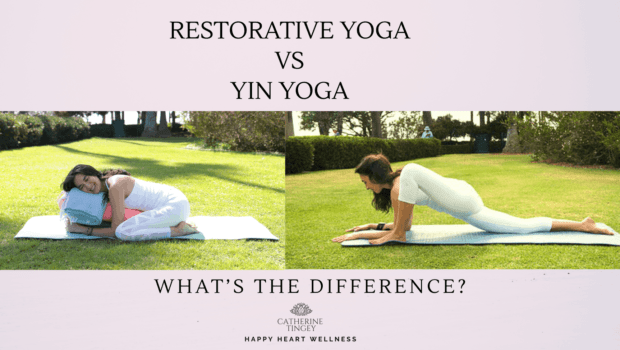
Restorative Yoga vs Yin Yoga
Restorative Yoga vs Yin Yoga
I once thought Restorative Yoga and Yin Yoga were the same thing.
I was interested in neither.
They seemed slow to teach and boring to practice.
I have such a different view today.
* * *
Although there is some overlap between the two styles, each is rooted in a distinct methodology.
Restorative Yoga is a floor-based practice where the goal is PASSIVE REST.
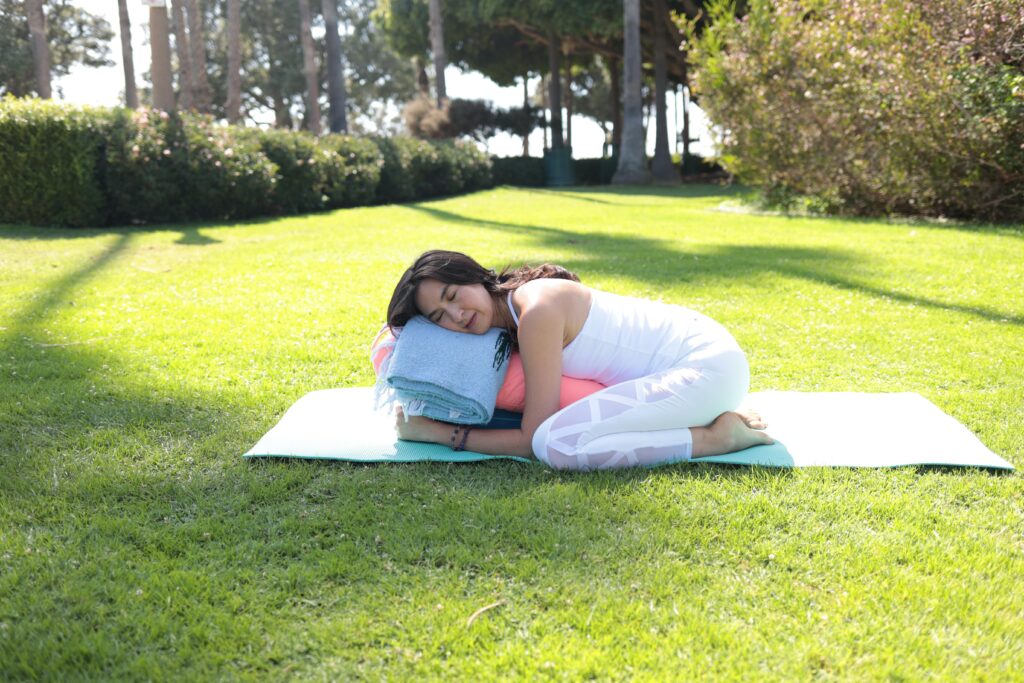
Supported Child’s Pose
The body is supported by props. We fill the space between the body and the floor with props to delete all muscular effort to ‘hold the pose. There should be little to no ‘stretching sensation’. In this way, the nervous system is invited to downshift.
Poses are held for 3-15 minutes.
This practice is very helpful for anyone recovering from burnout, prolonged illness or nervous system dysregulation.
Yin Yoga is a mostly floor-based practice where the goal is CONNECTIVE TISSUE RELEASE THROUGH MILD to MODERATE STRETCHING.
Yoga for Connective Tissue (Fascia) might be a better name for Yin Yoga

Lizard or Dragon Pose in Yin Yoga
Props are used minimally and a mild-to-moderate ‘stretching sensation’ is encouraged. Poses are held for 3-5 minutes.
After each Yin posture, a Rebound pose should be sequenced. The Rebound pose is a resting pose of 1-3 minutes. Its function is to absorb the stimulus of the previous pose. It is not a transition to the next thing. It’s a pause all its own.
The Rebound Pose is an invitation to integrate—rehydrate fascia, move chi, establish homeostasis.
Savasana is a common Rebound Pose, and is nice after Forward Bending. Child’s Pose is a good Rebound Pose, nicely sequenced after Backbends like Sphinx Pose.
The first time I did a proper Yin Yoga class with Rebound Poses, I felt my pulse in my left big toe. This made me happy as the left side of my body and SI joint had been jammed up, and this novel sensation got me hooked on Yin Yoga, and eager to learn more.
Not all Yin Yoga classes include Rebound poses but IMO, they should! The Rebound pose is when the Yin benefit occurs. I invite my students to stay open and curious as to what they feel in the Rebound pose.
I like this analogy — the Pose asks the question; the Rebound gives the answer.
A great resource on YouTube for Yin Yoga is Devi Daly Yoga.
A note:
Students of yoga will notice that many Yin Yoga poses are familiar to them by a different name. Example, Lizard pose above is called Dragon in Yin Yoga. Seated Forward Fold is called Caterpillar in Yin Yoga. This can make practicing different yoga styles confusing.
Additionally, when you search for Yin Yoga videos on YouTube, the word, ‘Restorative’ is often used in the title as an adjective as opposed to a noun, ‘Restorative Yoga.’
This might seem like semantics but I find it very important. If you are teaching in a specific style of yoga, you should adhere to that style’s tenets.
For example, in the Hatha Yoga I was brought up on, the spine is always lengthened in forward folds. In Yin Yoga, a rounded spine is emphasized. The difference in sensation and where the body is being stretched is quite different. As a teacher, your cueing should accurately reflect the style of yoga you are teaching in that class.
To My Readers – what have you experienced while practicing Yin? How does it compare to other styles you have practiced?
I’d love to hear.
Namaste,
Catherine
(Visited 106 times, 1 visits today)
Catherine Tingey

Entrepreneur, yogini, designer, award-winning filmmaker, personal trainer and former marathon runner. She left a career in finance to start her own business and along the way, became a yoga teacher. She has been practicing yoga for 33 years and teaching privately for 13 years.
About the Author

Catherine Tingey+ Entrepreneur, yogini, designer, award-winning filmmaker, personal trainer and former marathon runner. She left a career in finance to start her own business and along the way, became a yoga teacher. She has been practicing yoga for 33 years and teaching privately for 13 years.
Related Posts

Relaxing Anti Aging Practice →

SUPPORTED SPHINX →

Supported Shoulder Stand →